SHIFT Project: Meet Make Collaborate
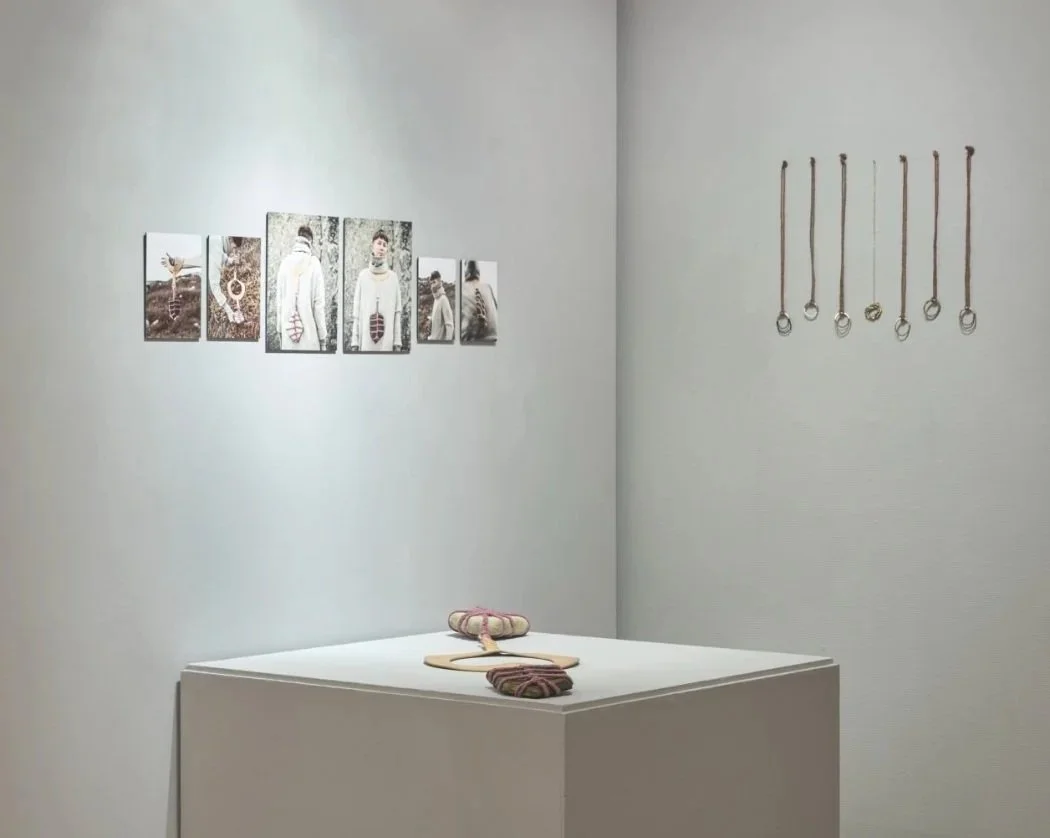
The SHIFT: Meet, Make, Collaborate exchange/residency in 2019/2020 brought together 4 artists from Mi’kma’ki/Nova Scotia with 4 artists from Scotland to create both independent and collaborative work. The project culminated in Identity, Collaboration, Sustainability: an online international festival of craft, and an internationally touring exhibition that showed at the Inverness Museum and Art Gallery (Inverness, Scotland), The Barn (Banchory, Scotland), and the Cape Breton Center for Craft & Design (Sydney, NS).
Necklace Study
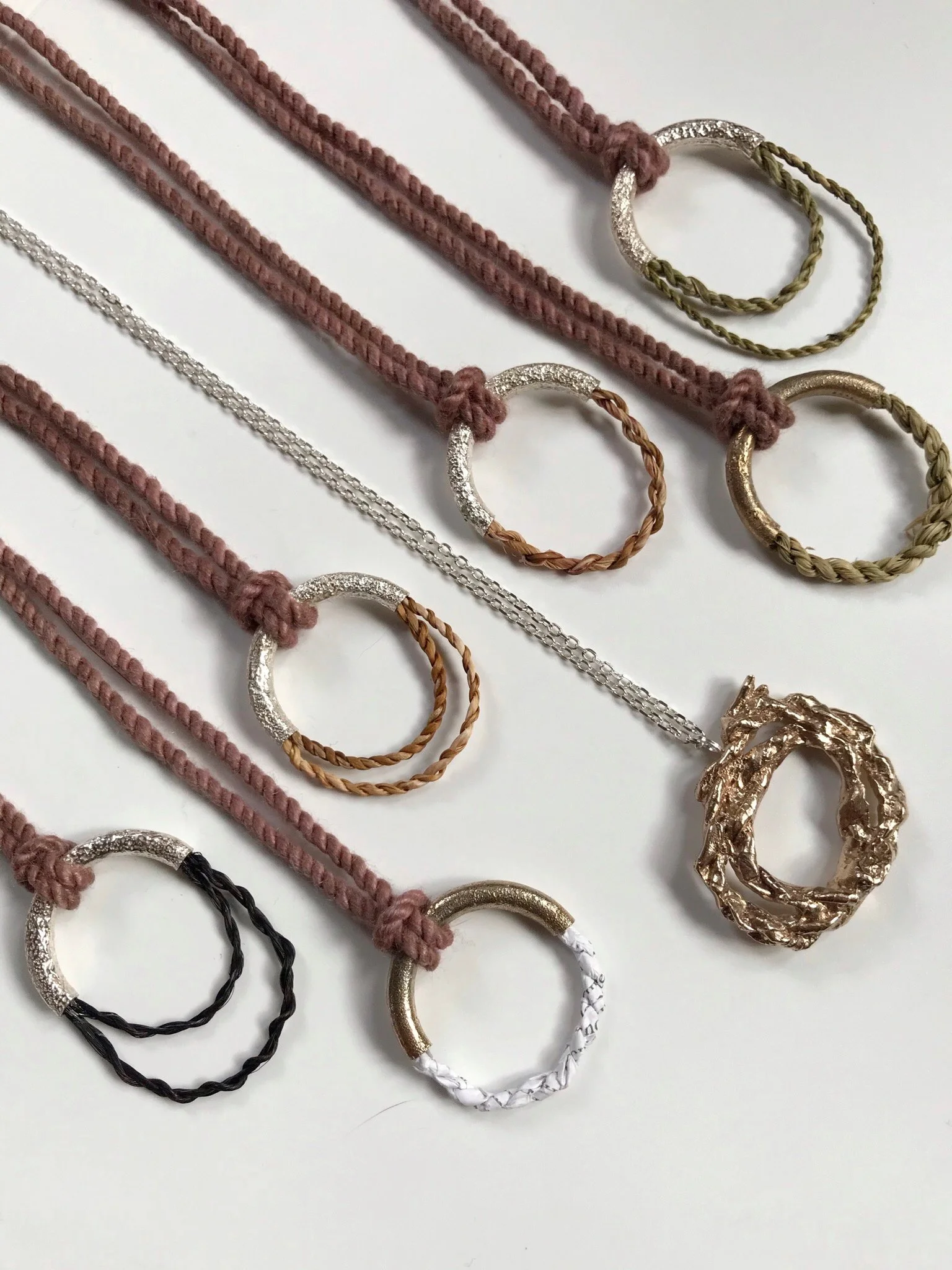
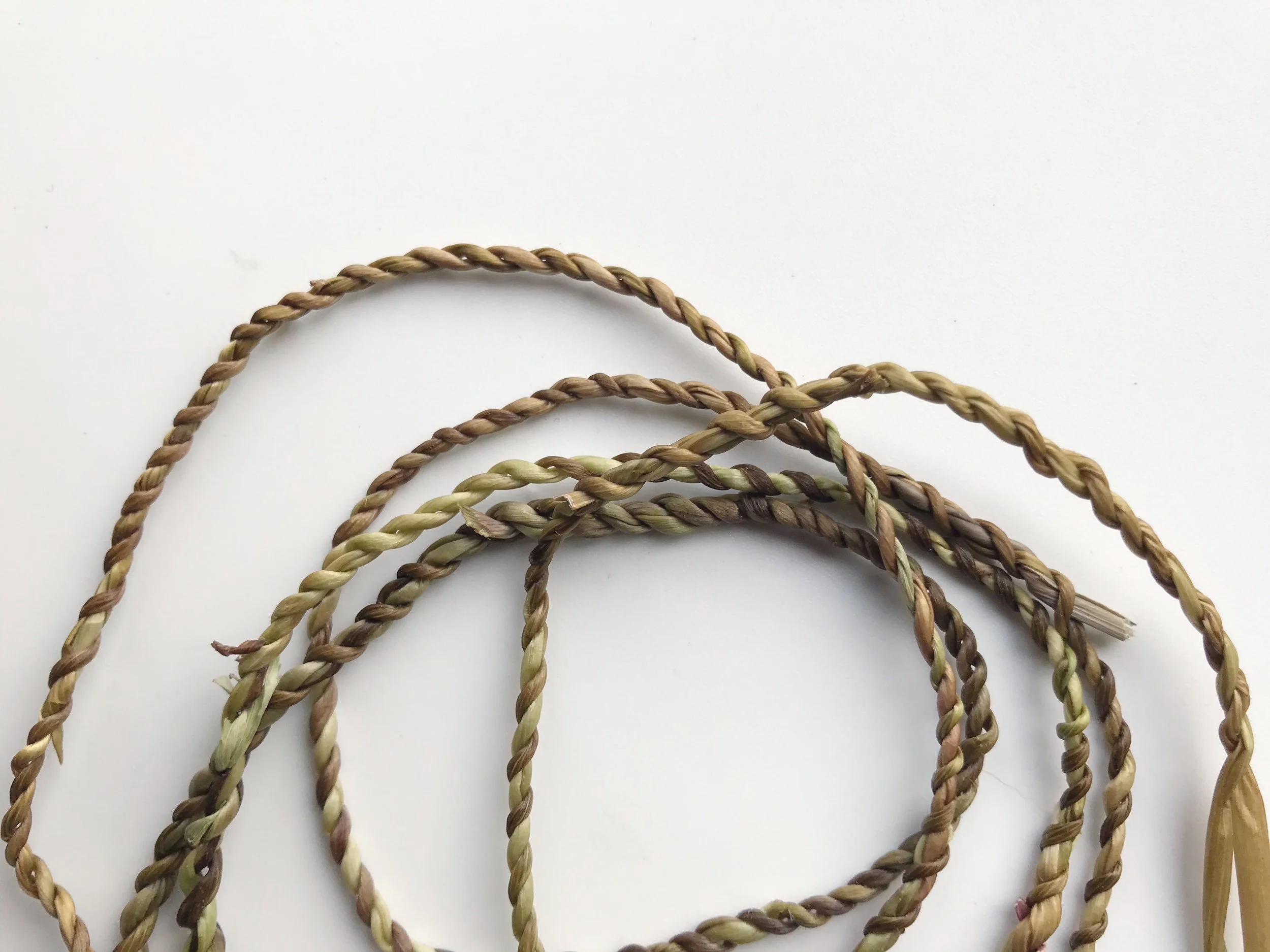
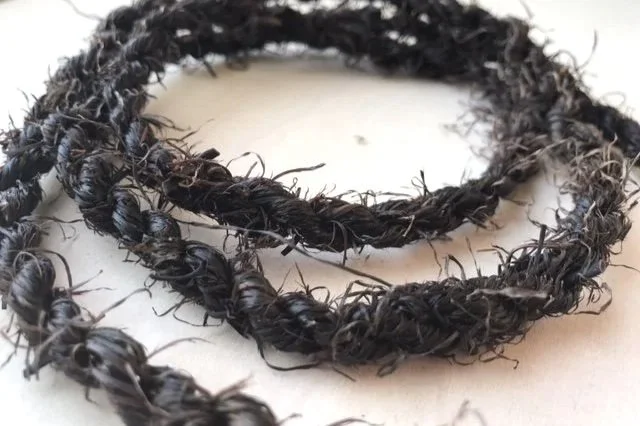
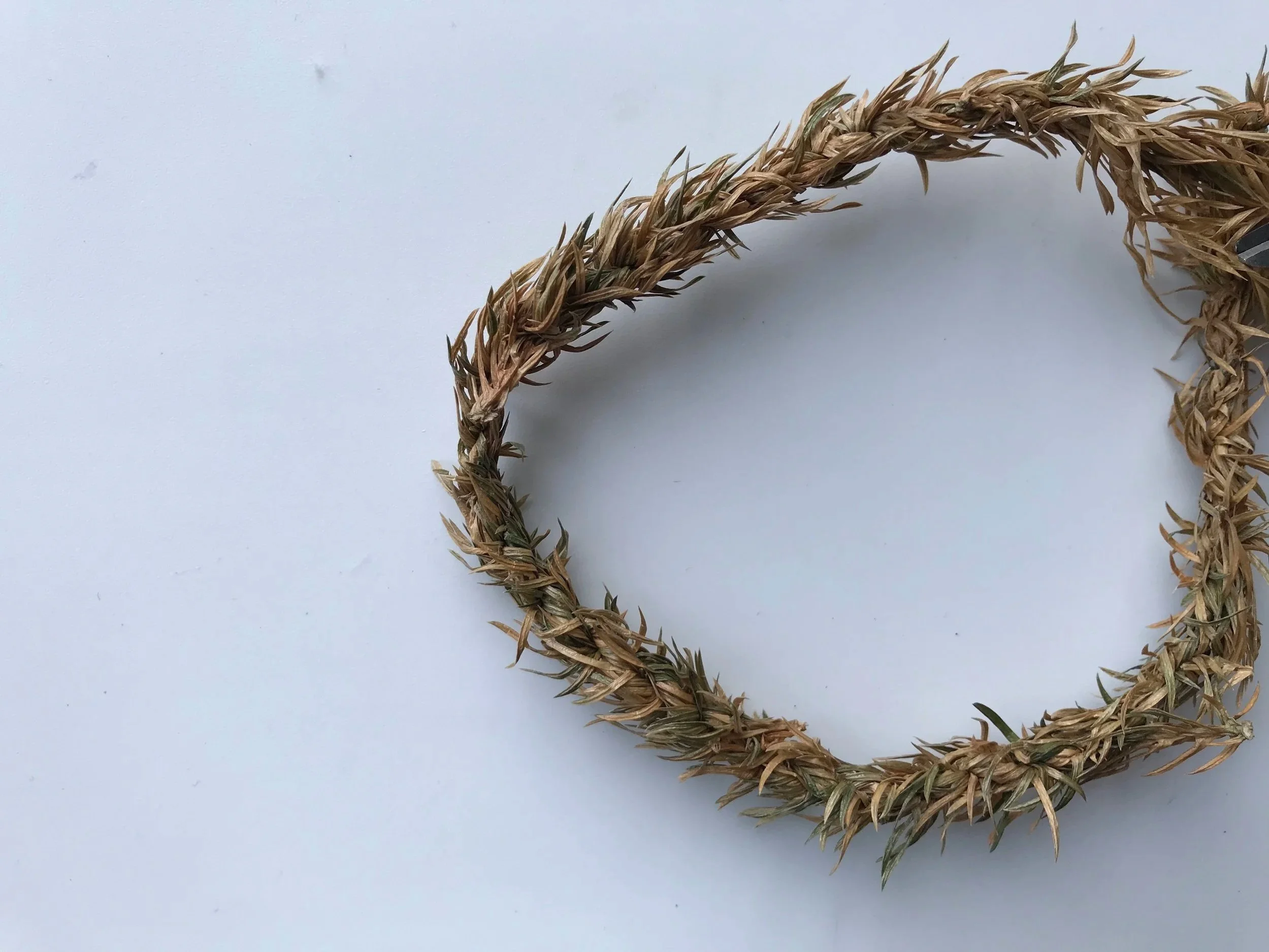
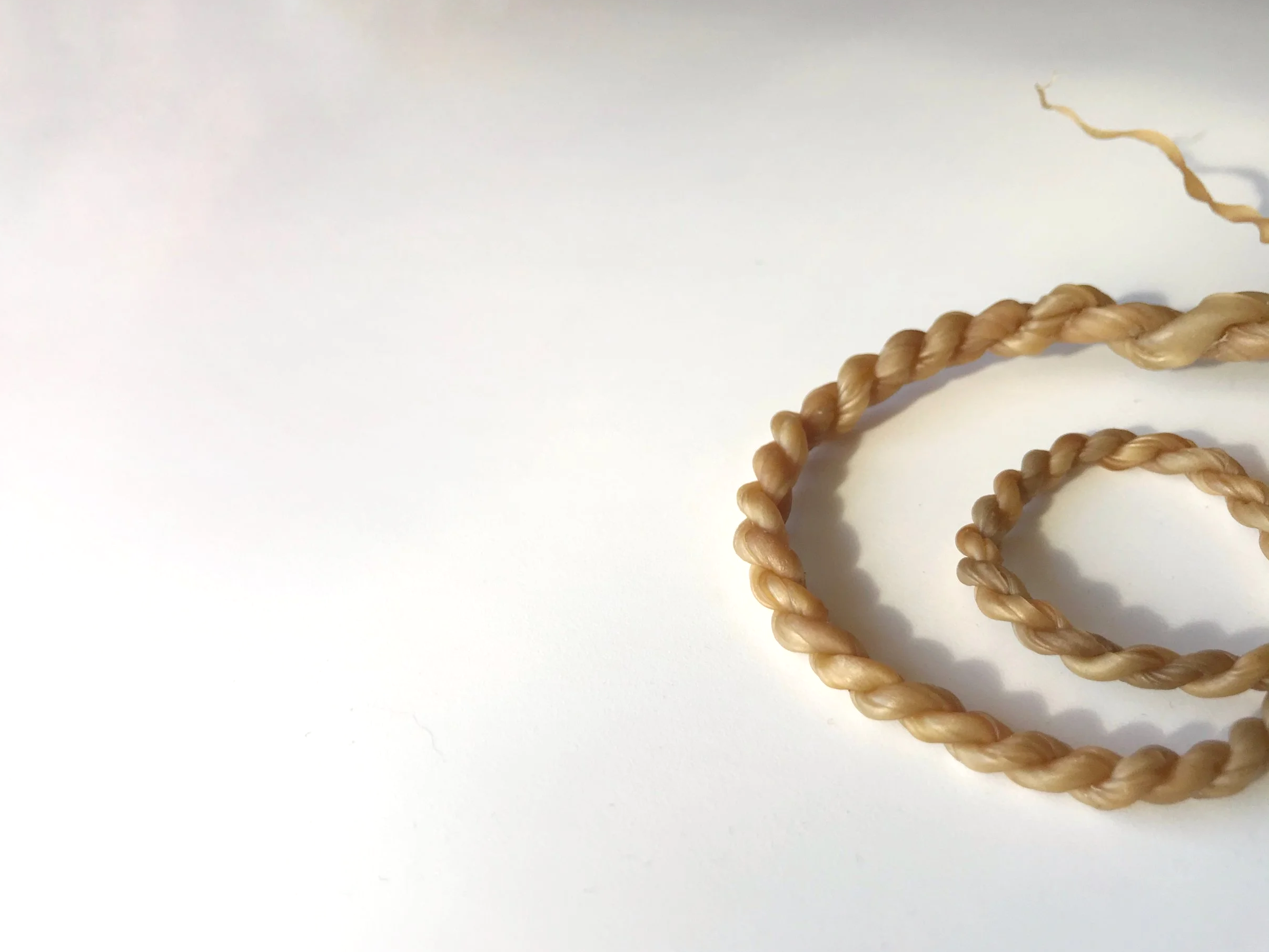
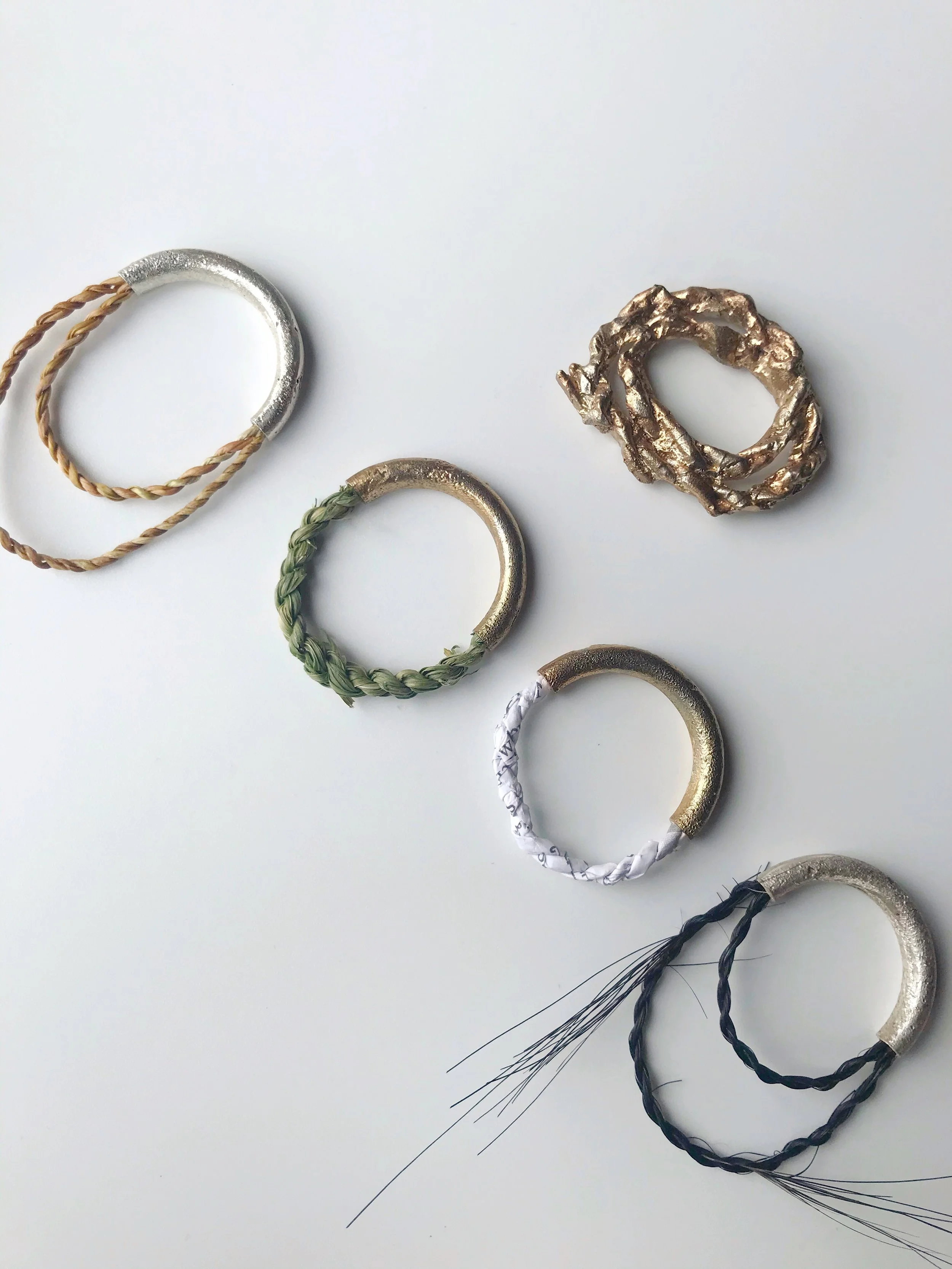
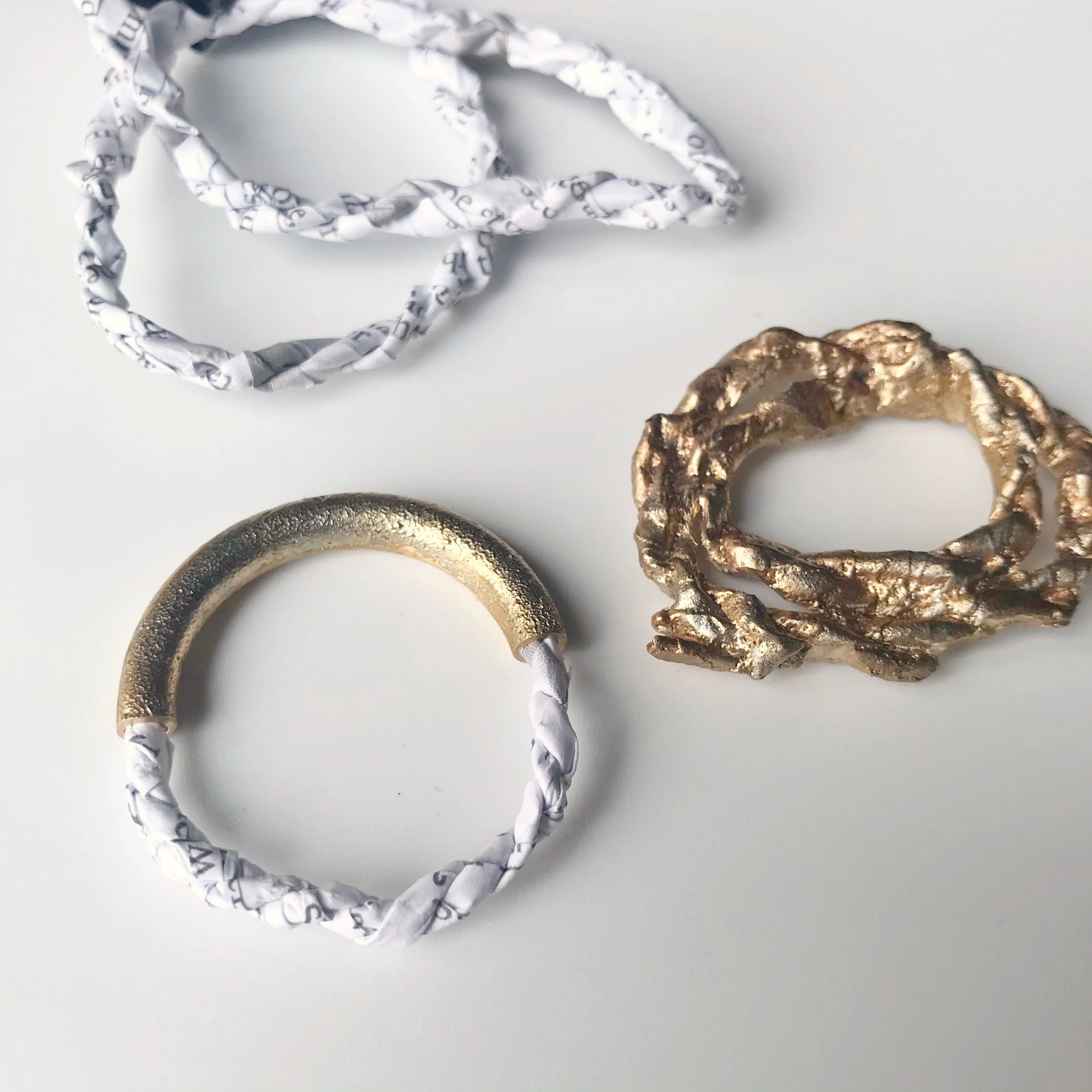
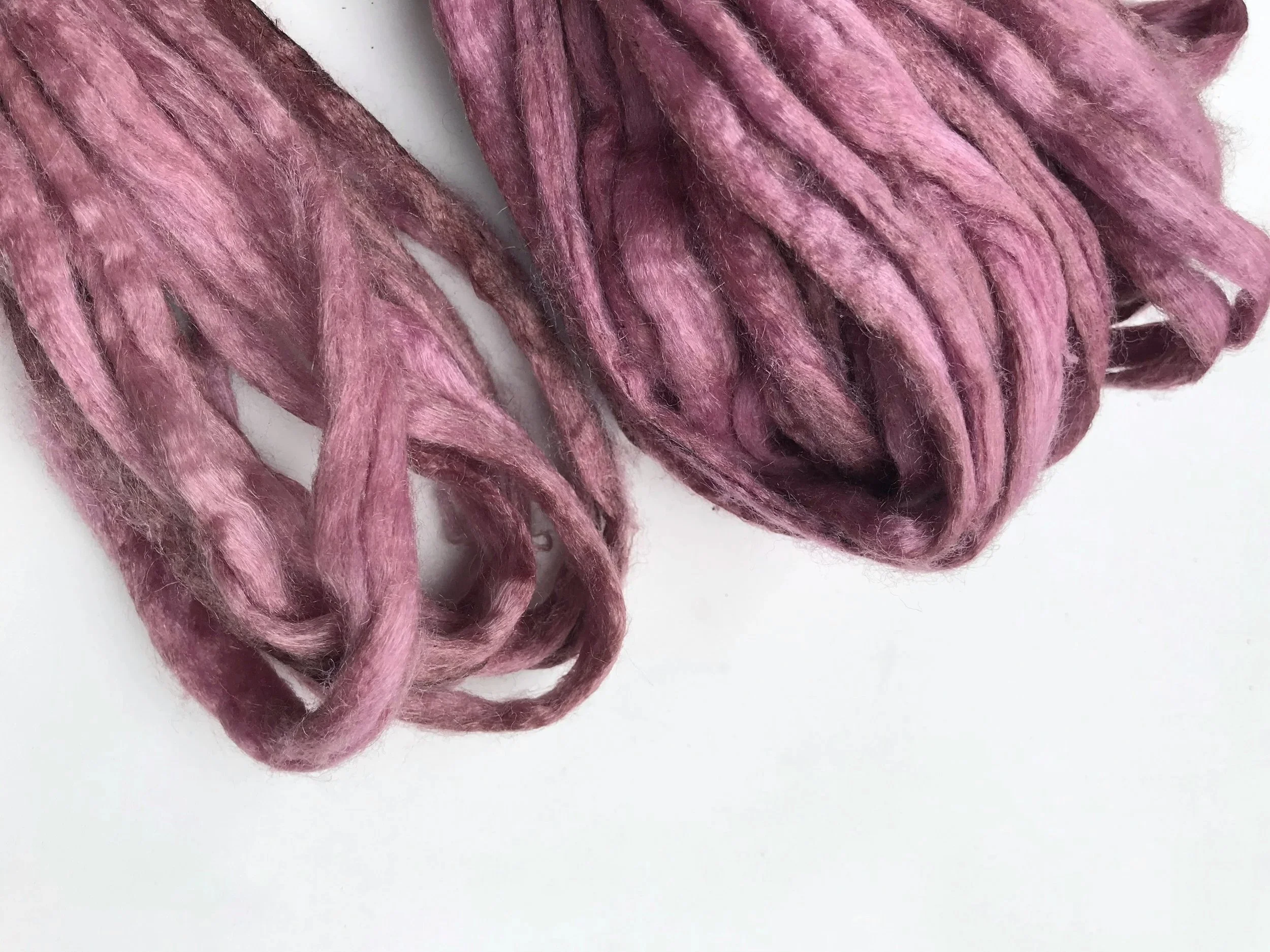
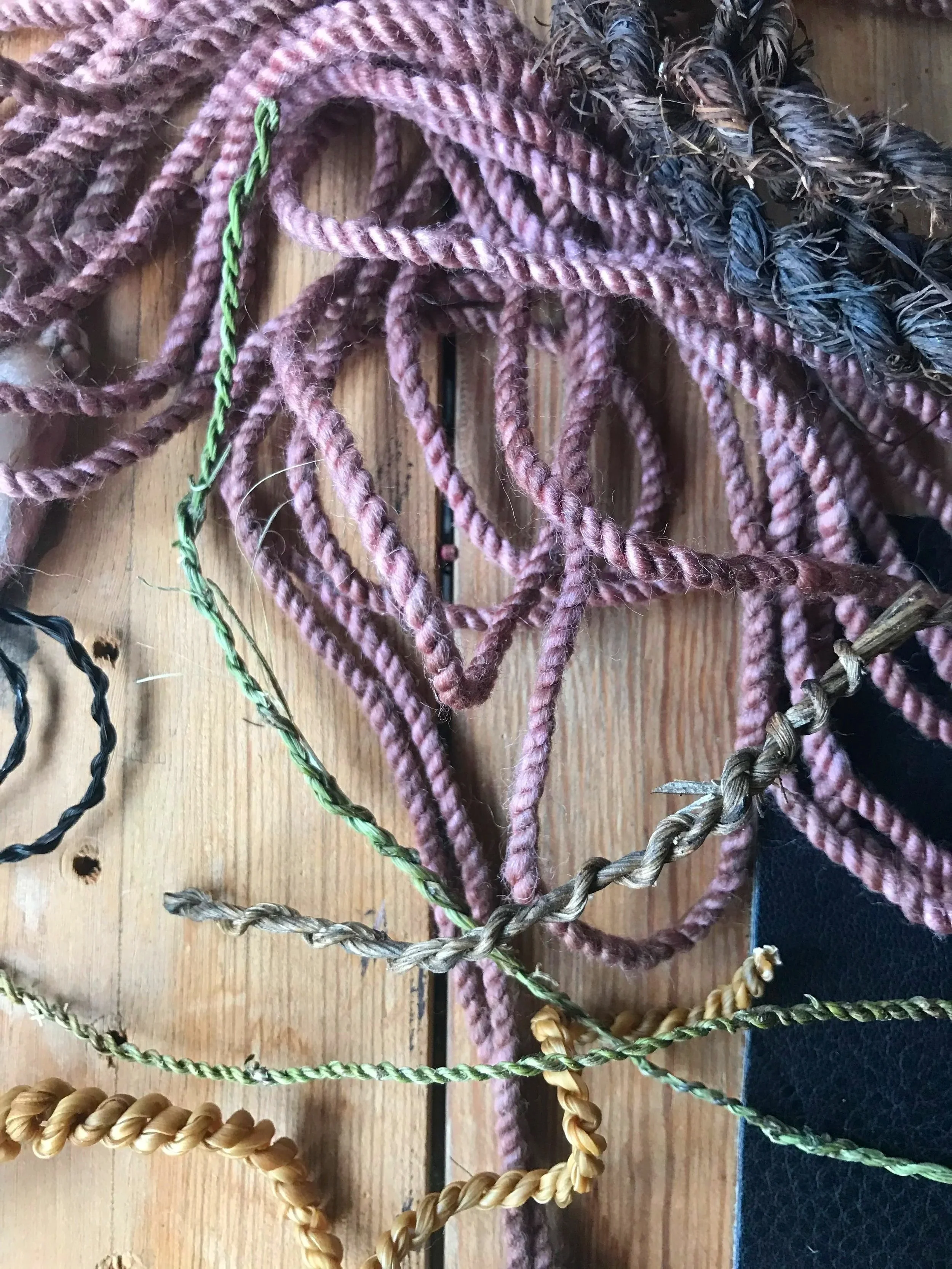
This work centered hand making as an embodied practice of reconnection to lineage in service of reckoning with legacies of colonial harm and white supremacy. In researching traditional hand making techniques of the Highlands & Orkney Kit was drawn to the craft of making simmens--handmade rope from straw, heather, and other natural materials. They committed to a daily practice of hand making rope from local materials which are featured in this collection of pendants--each an embodied spell of reconnection and collaboration with their ancestors. As an extension of this study/practice, paper rope was made from writings and reflections on the legacies of harm, cultural disconnection, whiteness and fragility. Casting this paper rope into bronze stood as a material representation of alchemizing shame and disconnect into something more solid; cultivating an embodied resilience in the context of examining racial inequities wherein fragility, fear of making mistakes, and immobilization are common responses to calls for accountability and action.
Sandcast sterling silver and bronze cast with sand from Orkney & Mi’kma’ki (Nova Scotia), horsehair, dandelion, nettle, knotweed, paper, and lichen (Umbilicaria Mamulata) died wool.
Torso Piece
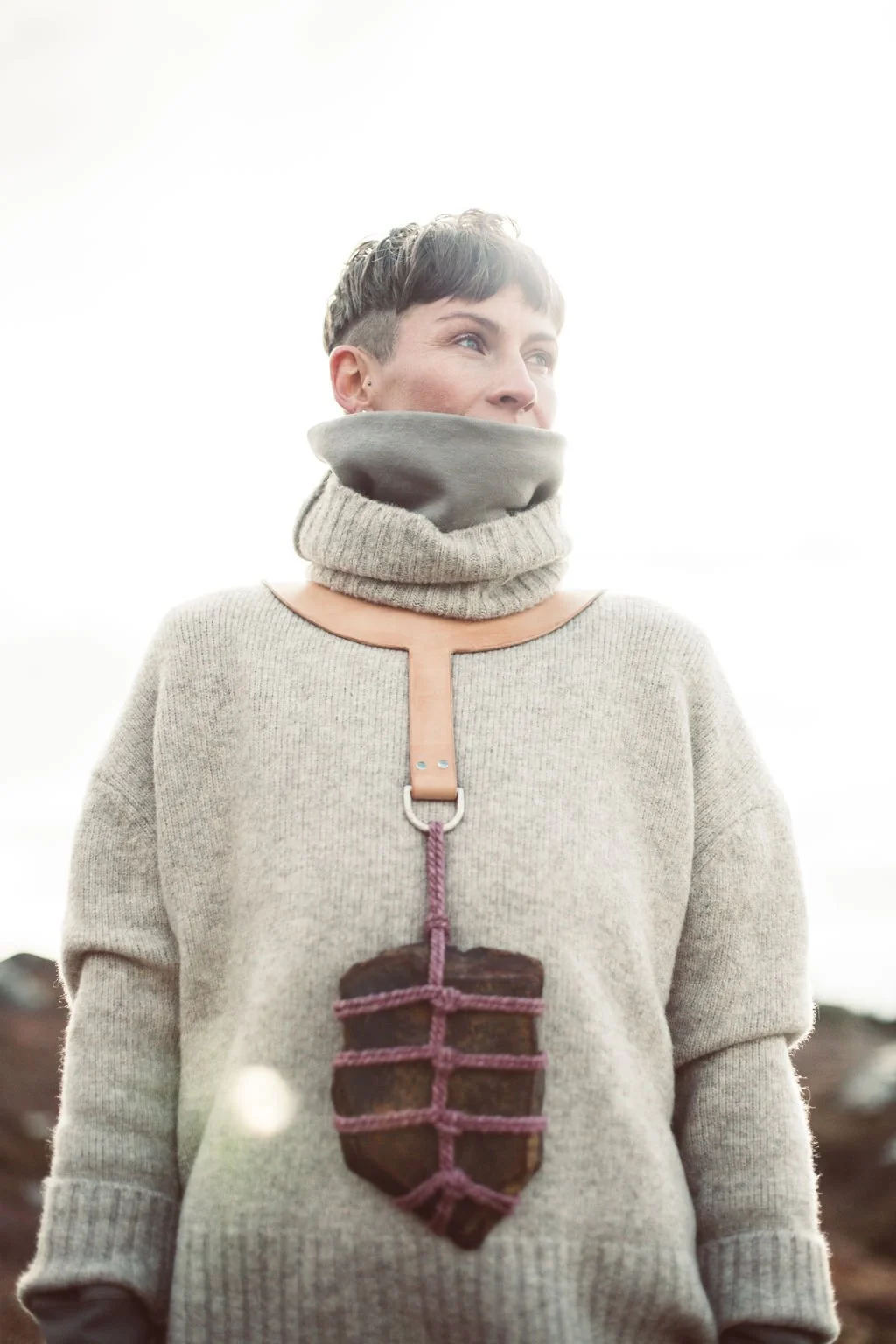
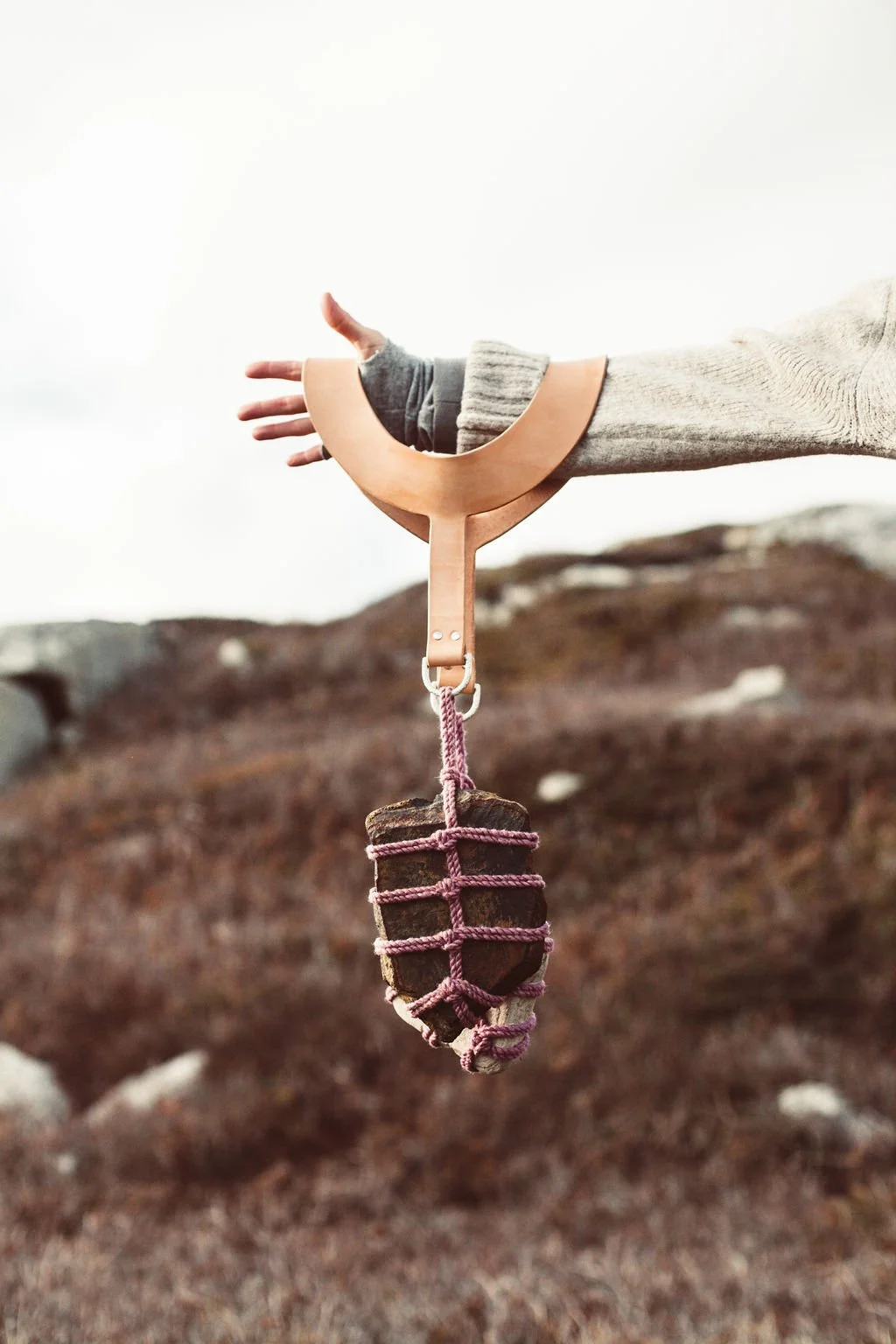
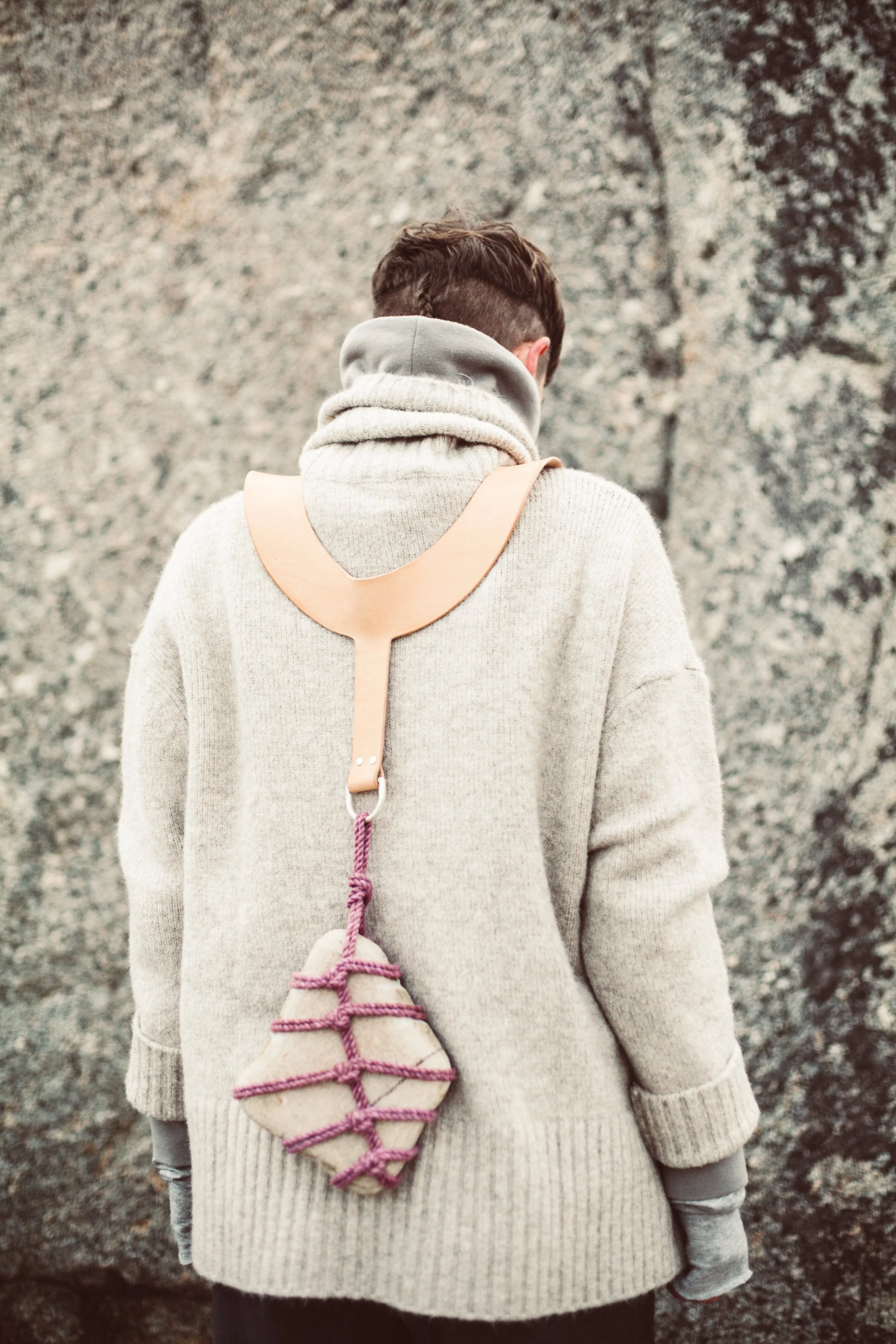
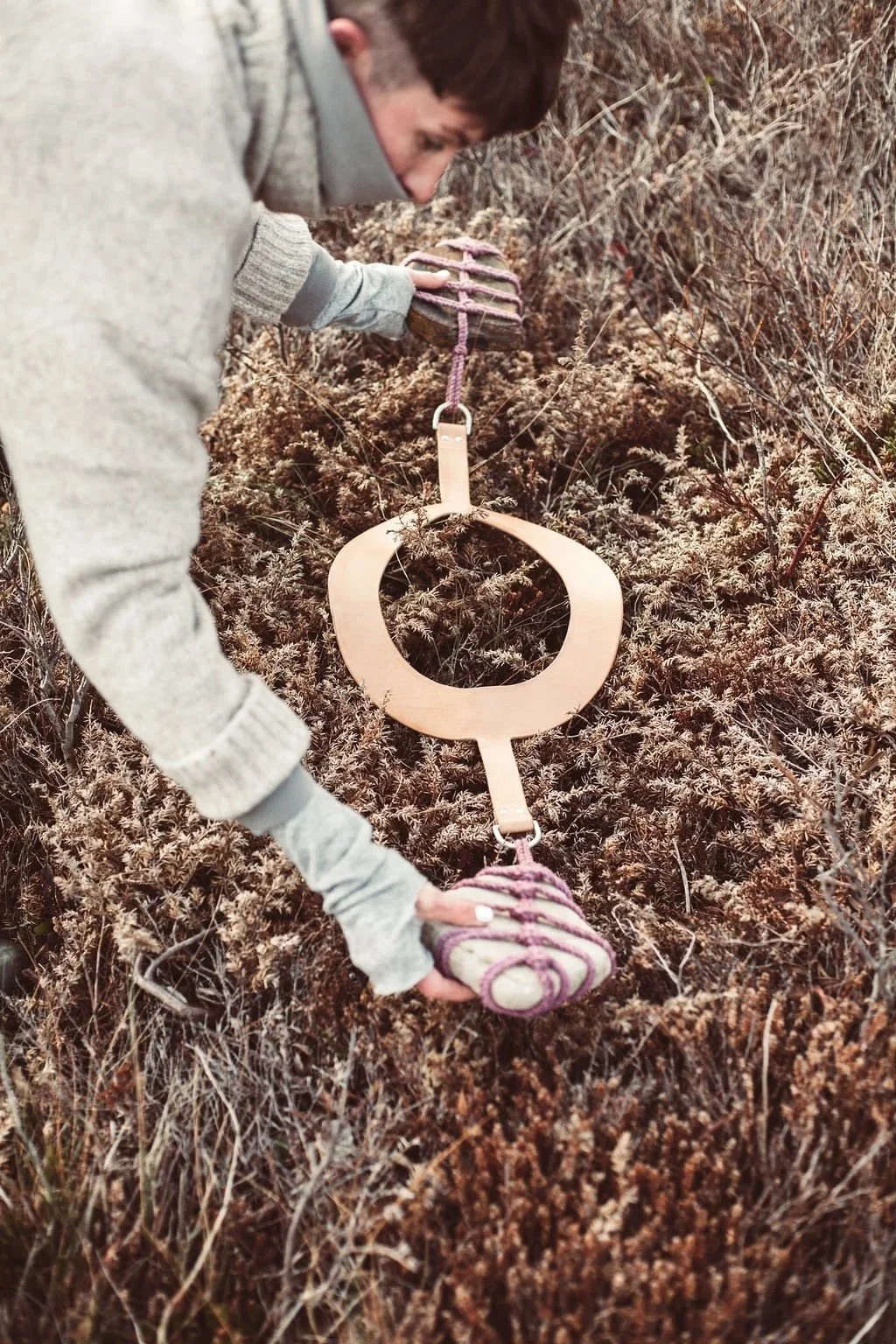
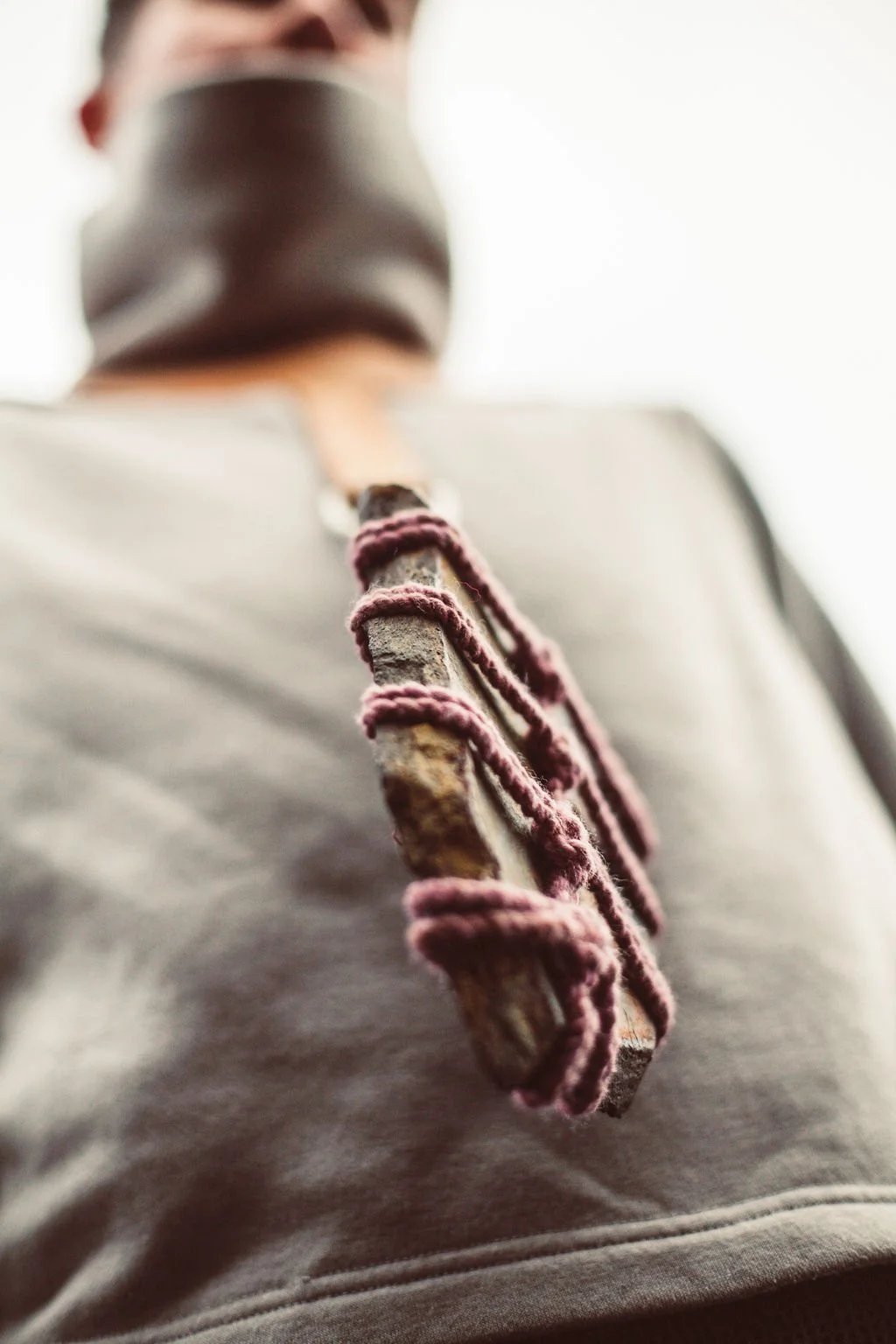
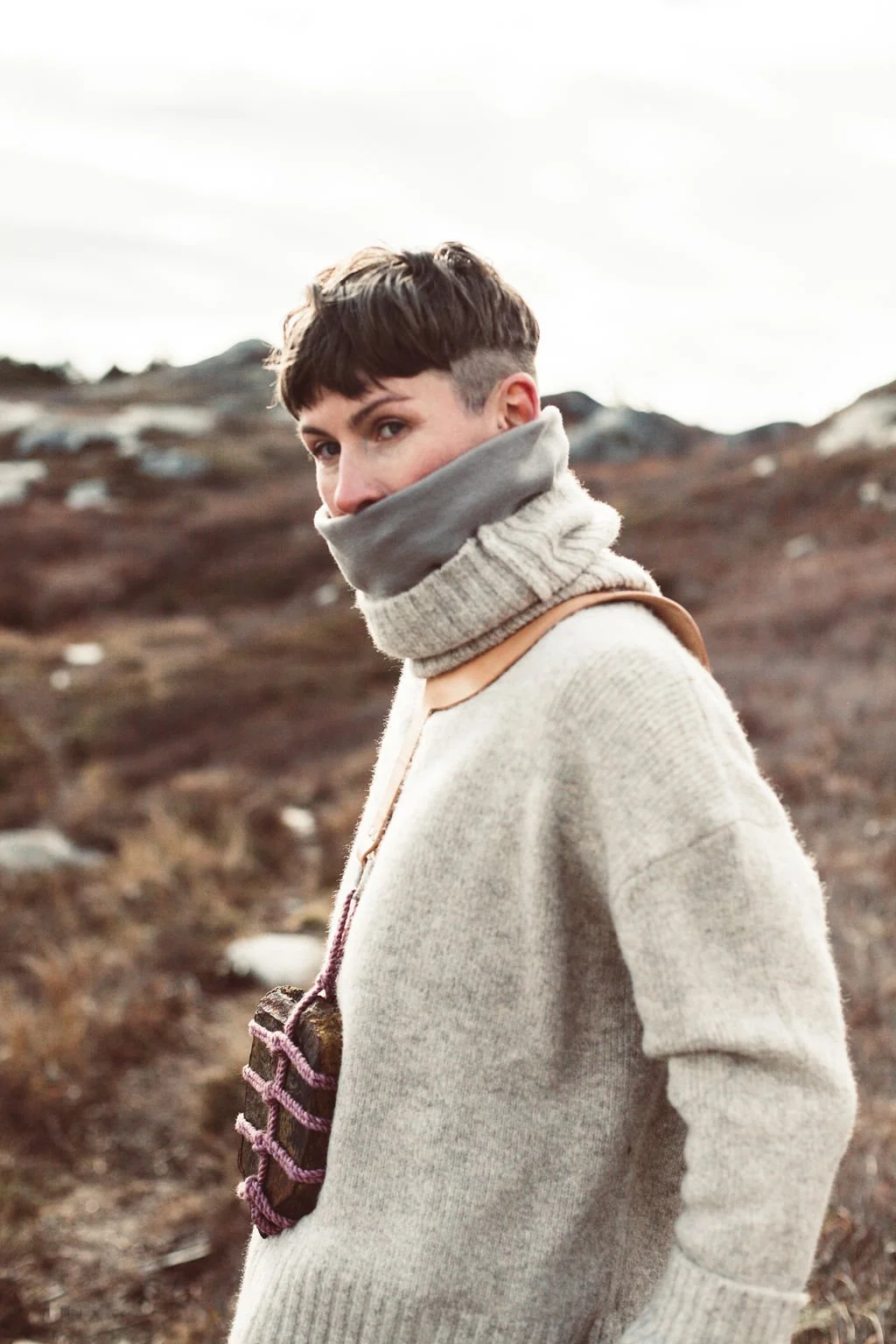
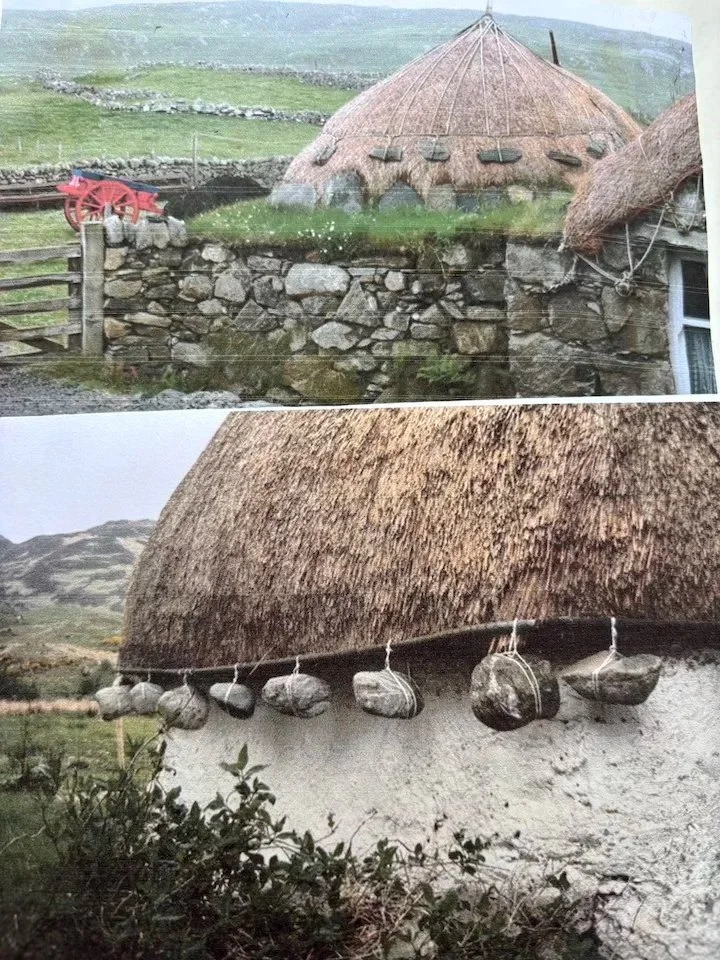
The process of excavating ancestral lineage, as a white settler of Scottish/Orcadian and Irish descent, necessitates a reckoning with legacies of colonial harm. Torso Piece facilitates a somatic practice of sitting with the tension inherent in this reckoning and in the ‘both/and’ reality of colonizer/colonized. The rocks, akin to bendlin stanes traditionally used to secure thatched roofs in Orkney, create a physical tension in the body; an opportunity to practice an embodied presence under said tension and discomfort, encouraging a felt sense of connection to the land and holding space in which to inhabit other expressions of hybridity. The rock suspended on the back body is from Orkney, representing history and the landscape of Kit’s Orcadian ancestors while the rock suspended on the front body is from Mi’kma’ki, representing their current home and the legacy of this land. The leather, handmade rope dyed with lichen (a hybrid organism) and the ropework suspending the rocks draw in queer and kink lineages. This work questions how a regenerative connection to lineage and an embodied practice of sitting with complexity might ground and expand our resilience to better serve the sustainability of our work and collective movements for racial and environmental justice.
Veg tan leather, sandcast sterling silver hardware cast with sand from Orkney & Mi’kma’ki (Nova Scotia) handmade rope made from lichen (Umbilicaria Mamulata) dyed wool, rocks from Orkney & Mi’kma’ki (NS). Photos of Torso Piece by Mo Phùng & rope support by darlings Katherine Carey & Fin Spangenberg. Last photo is a reference photo of bendlin stanes on thatched roofs in Orkney.
Audiovisual Tapestry
This experimental audiovisual piece was created by SHIFT Project collaborators Kit Holden-Ada and Louise Barrington. It draws on Louise’s Orcadian cultural identity and relationship to the land and sea, Kit’s identity as a queer non-binary settler, and each of their interdisciplinary practices. Emerging from a shared interest in experimenting with sound and light as craft materials, this audio-visual tapestry is an exploration of tension and expansion within ‘in-between’ times and spaces. Louise collaged moving images that reflect everyday moments within the landscapes of Orkney and Mi’kma’ki/Nova Scotia maximizing light, shadow and movement while Kit composed the soundscape by weaving together audio samples from in-between times (dawn/dusk, spring/fall) and spaces (shorelines and intertidal areas) from both places. Reflecting liminality as an expansive condition versus a condition of opposition, this work is a subtle troubling of false-dichotomies such as fine art/craft, colonizer/colonized, invisible/visible, gay/straight, and the gender binary.